How Automated BGV Can Reduce Hiring Risks for Businesses
17 August 2026
Hiring the right people is one of the most important decisions a business makes. A candidate may have an impressive resume and perform well in interviews, but companies can still face risks if the information provided during recruitment is not properly verified.
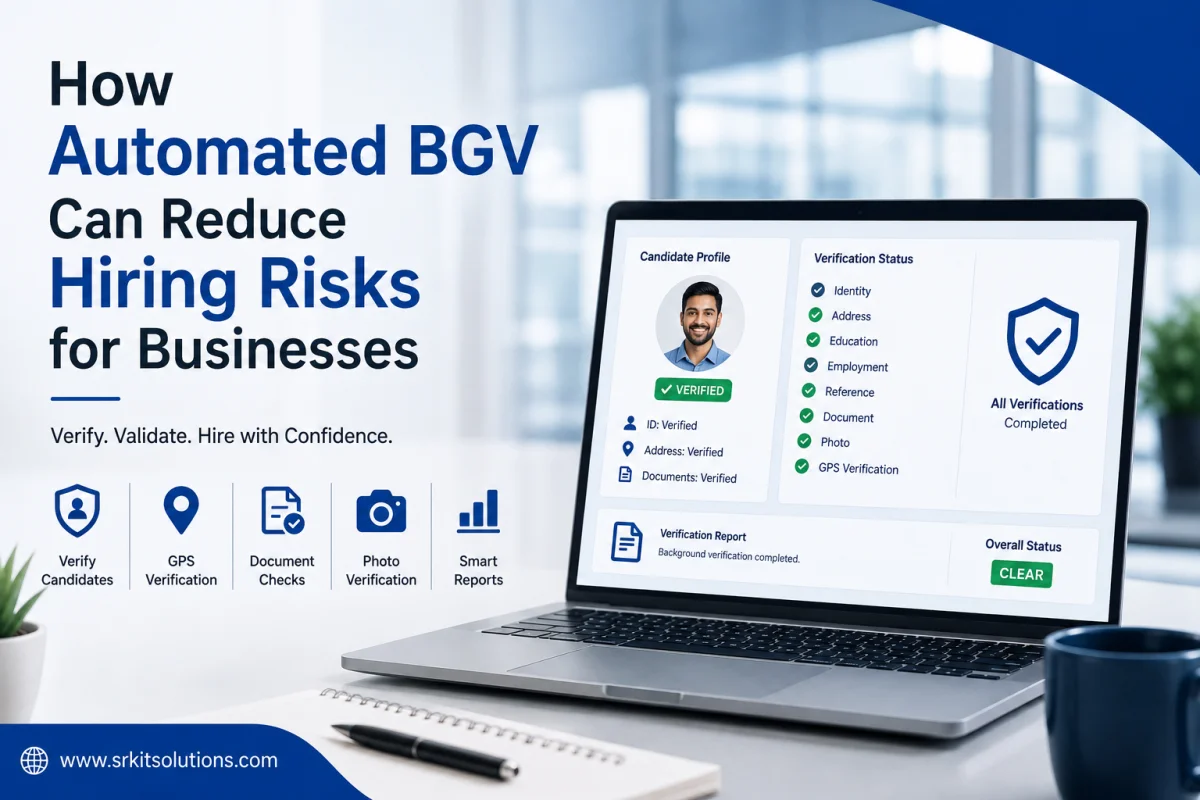
Background Verification (BGV) helps businesses validate important candidate information before making a hiring decision. With modern technology, this process can be automated, making verification faster, more structured, and easier to manage.
For businesses handling multiple candidates, an automated BGV solution can significantly reduce the workload associated with manual verification while helping HR teams make more informed hiring decisions.
What Is Background Verification?
Background Verification is the process of checking and validating information provided by a job candidate.
Depending on the organization's requirements, verification may include:
 Identity verification
- Address verification
- Employment verification
- Educational verification
- Reference verification
- Document verification
- Candidate photograph verification
- Location-based verification
The objective is not simply to identify incorrect information. A well-designed BGV process helps organizations establish greater confidence in the information provided by candidates.
Why Manual BGV Can Create Challenges
Traditional background verification often involves emails, spreadsheets, phone calls, physical documents, and multiple follow-ups.
As the number of candidates increases, HR teams may find it difficult to maintain consistency across every verification.
Common challenges include:
1. Time-Consuming Processes
Manually collecting documents and verification information can take considerable time. HR teams may need to repeatedly contact candidates or verification teams to obtain missing information.
2. Human Errors
Copying candidate information between spreadsheets, emails, and other systems can result in data-entry mistakes.
3. Difficult Tracking
When several candidates are being verified simultaneously, it can become difficult to determine which checks are completed, pending, or require additional attention.
4. Inconsistent Verification
Different team members may follow different procedures when performing verification, potentially resulting in inconsistent outcomes.
5. Delayed Hiring Decisions
If verification takes too long, organizations may have to delay onboarding or hiring decisions.
Automation can address many of these challenges by bringing the verification workflow into a centralized digital platform.
How Automated BGV Reduces Hiring Risks
1. Standardizes the Verification Process
An automated BGV system can provide a predefined workflow for every candidate.
Instead of relying on individual employees to remember each verification step, the system can guide the process from candidate registration through completion.
This creates a more consistent verification experience.
2. Reduces Data Entry Errors
Automated workflows reduce the amount of repetitive manual data entry.
Candidate information can be collected digitally and associated with the appropriate verification request. This helps reduce errors caused by repeatedly entering the same information into different systems.
3. Makes Candidate Identity Verification Easier
Identity is an important part of background verification.
A digital BGV platform can collect relevant identity documents and candidate photographs as part of the verification workflow.
Additional validation processes can then be applied according to the organization's requirements.
4. Enables Location-Based Verification
For certain verification processes, knowing where a verification activity was performed can provide useful information.
Modern BGV platforms can incorporate GPS and location information into verification workflows where appropriate.
This can help organizations maintain better records of field verification activities.
5. Simplifies Address Verification
Address verification can be particularly challenging when handled entirely through manual processes.
A digital workflow can collect candidate address information, supporting documents, verification details, and field verification results in a structured format.
This makes the information easier for HR teams to review.
6. Creates a Centralized Verification Record
Instead of maintaining information across emails, spreadsheets, and physical documents, an automated BGV system can maintain candidate verification information in one place.
HR teams can quickly see:
- Candidate details
- Verification requests
- Submitted documents
- Verification status
- Pending checks
- Completed checks
- Remarks
- Final reports
This improves visibility throughout the hiring process.
Automated Reports Improve Decision-Making
One of the major advantages of digital BGV is the ability to generate structured verification reports.
Rather than manually compiling information from different sources, the system can organize verification results into a consolidated report.
A report may include relevant candidate information, verification results, supporting documents, remarks, and other available verification data.
This allows HR and management teams to review the outcome more efficiently before proceeding with hiring.
Faster Verification Means Faster Hiring
Hiring delays can affect both employers and candidates.
A candidate who has successfully completed interviews may still have to wait for verification before receiving final confirmation.
Automation can reduce administrative delays by providing:
Candidate Registration → Document Collection → Verification → Status Tracking → Report Generation
A structured workflow allows teams to identify pending actions quickly and reduce unnecessary follow-ups.
Automation Does Not Mean Removing Human Review
An important point to understand is that automation should support HR and verification teams rather than completely replace human judgment.
Some verification cases may require additional investigation, clarification, or manual review.
A good BGV platform should therefore make it easy to identify exceptions and allow authorized personnel to review them.
Automation handles repetitive processes, while people can focus on cases that require attention.
Security and Data Protection Matter
Background verification involves sensitive candidate information. Organizations should therefore consider security when selecting a BGV solution.
A reliable system should have appropriate controls for:
- User access
- Candidate data
- Document storage
- Authentication
- Data transmission
- Audit trails
- Report access
Businesses should also ensure that their verification processes comply with applicable privacy and data protection requirements.
What Businesses Should Look for in a BGV Tool
When evaluating a background verification platform, businesses should consider more than just automation.
Important capabilities may include:
Digital Candidate Registration
Candidates should be able to provide their information through a structured digital process.
Document Collection
The platform should support the collection and organization of relevant candidate documents.
GPS-Based Verification
Location information can be useful for field-based verification processes where applicable.
Photo and Selfie Verification
Digital photographs or selfies can provide additional information during identity and field verification workflows.
Digital Signature
Digital signatures can simplify authorization and acknowledgement processes.
Verification Status Tracking
HR teams should be able to identify pending, completed, and failed verification activities easily.
Automated Reports
The system should provide clear and structured verification reports that can be reviewed by authorized users.
Centralized Candidate Management
All relevant verification information should be available through a single platform rather than scattered across multiple tools.
Benefits for HR Teams
Automated BGV can provide several practical benefits:
Less administrative work: HR teams spend less time managing repetitive verification activities.
Better visibility: Verification status can be monitored from a centralized system.
Improved consistency: Standardized workflows help ensure that candidates follow the same verification process.
Faster processing: Digital workflows can reduce unnecessary delays.
Better documentation: Verification information and reports can be maintained systematically.
Scalability: Businesses can handle larger numbers of candidates without increasing manual administrative work at the same rate.
The Future of Background Verification
Background verification is moving from manual, paper-heavy processes toward digital and automated workflows.
Technologies such as artificial intelligence, digital identity verification, GPS-based verification, document processing, cloud platforms, and automated reporting can make BGV processes more efficient.
However, technology should always be implemented responsibly. Candidate privacy, data security, transparency, and appropriate human review remain important parts of the process.
The future of BGV is not simply about verifying candidates faster. It is about creating a secure, transparent, consistent, and scalable verification process that helps businesses make better-informed hiring decisions.
How SRK IT Solutions Can Help
At SRK IT Solutions, we develop technology solutions that help businesses digitize and automate their operational processes.
Our Background Verification Tool is designed to help organizations manage candidate verification through a centralized digital workflow. Depending on business requirements, the platform can support capabilities such as candidate information collection, document verification, GPS-based verification, selfie/photo capture, digital signatures, verification tracking, and report generation.
By reducing repetitive manual work and bringing verification activities into a structured platform, businesses can create a more efficient BGV process while maintaining better visibility over their hiring workflow.
Conclusion
Hiring the right employee requires more than reviewing a resume and conducting an interview. Businesses need confidence that the information provided during recruitment is accurate and can be appropriately verified.
Automated BGV helps organizations reduce administrative effort, improve process consistency, track verification activities, and make hiring decisions with better-organized information.
As businesses continue to adopt digital HR processes, automated background verification can become an important part of building a safer, faster, and more efficient hiring process.
Looking to digitize your background verification process? SRK IT Solutions can help you build a BGV solution tailored to your business requirements.
Blog Categories